How to fix a dripping faucet
A dripping faucet is usually a worn washer or cartridge, and it is one of the most fixable jobs in a Cleveland home. Here is how to do it safely, step by step.
A faucet that drips once a second can waste a large amount of water over a month, and the steady sound is enough to drive anyone to fix it. The good news is that most drips come from one worn part inside the faucet, and replacing it is a straightforward job if you take it slowly. This guide walks through the repair for the common faucet types found in Cleveland homes. It is written as a careful job you can do in one sitting, not a race: the old title promised thirty minutes, and some faucets take longer once corrosion or a stuck part is involved, so the time promise has been dropped and the steps kept.
Before you start: shut the water off
Find the shutoff valves under the sink, one for hot and one for cold, and turn them clockwise until they stop. Open the faucet to drain the remaining water, then plug the drain with a cloth or a stopper so a small screw cannot disappear down it. If the shutoff valves do not turn, are corroded, or keep dripping themselves, stop and call a plumber: forcing a seized valve can break it and flood the cabinet. Take a photo of the faucet and its handle before you take anything apart, so you have a reference for reassembly.
Work out which faucet you have
Most Cleveland homes have one of four types. A compression faucet has separate hot and cold handles that you turn several times, and it uses a rubber washer that presses onto a seat. A ball faucet has a single handle that moves over a ball, common in older kitchens. A cartridge faucet has a single handle that lifts and turns, and it uses a cartridge that slides in and out. A ceramic disc faucet has a single lever that moves a short distance, and it uses two ceramic discs. The repair differs by type, but the principle is the same: open the faucet, remove the worn sealing part, match it at the store, and fit the new one.
Replace the washer or cartridge
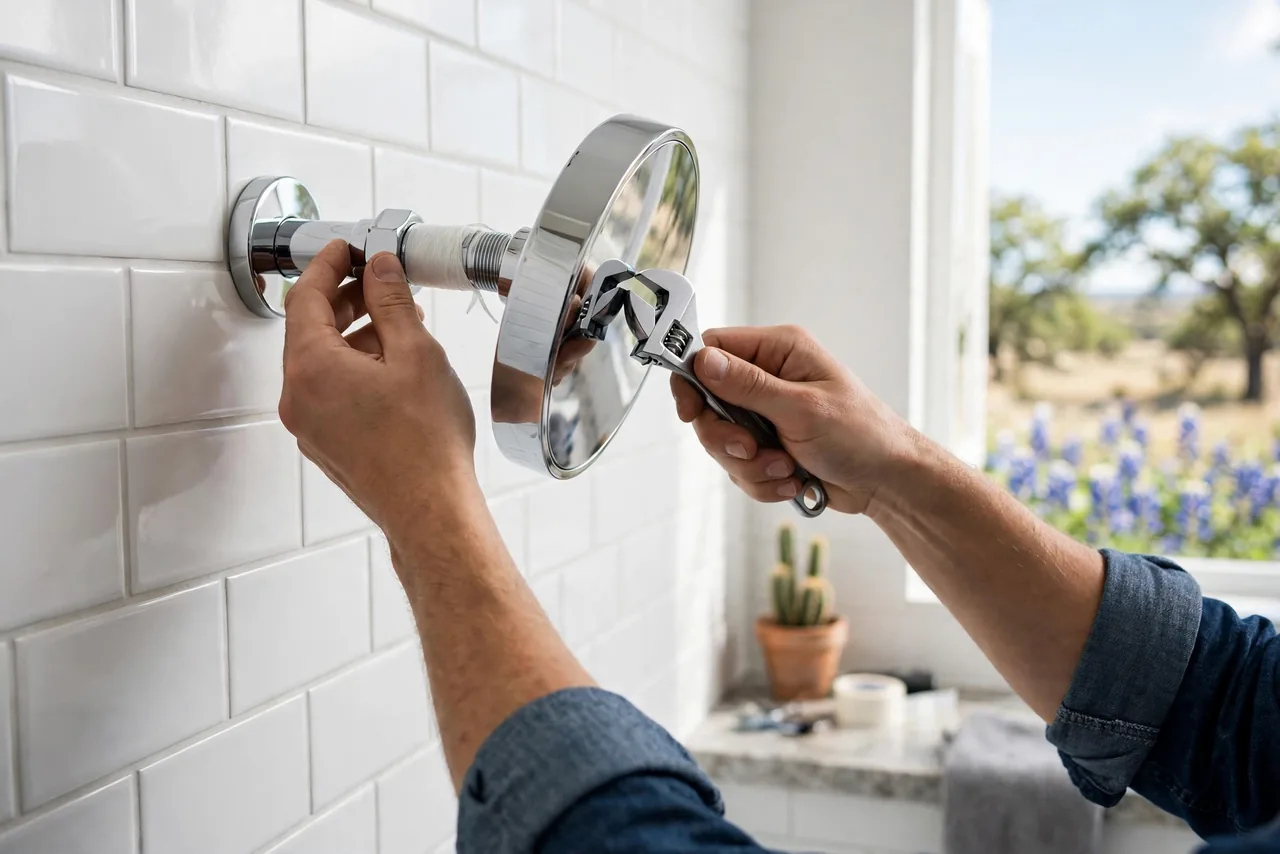
Remove the handle by taking out the screw hidden under a decorative cap, then lift the handle off. For a compression faucet, unscrew the packing nut, lift out the stem, and remove the washer at the bottom with a screwdriver. Take the old washer with you to match it exactly, because a washer that is slightly too large or too small will keep dripping. For a cartridge faucet, pull the retaining clip, slide the cartridge out, and match it by brand and model. For a ceramic disc faucet, lift out the disc cartridge and replace it as a unit. Clean the seat or the housing with a cloth while it is open, and check for pitting or scoring: a damaged seat will chew through a new washer in weeks. Reassemble in reverse order, tightening firmly but not forcing anything, then turn the water back on slowly and check for leaks at every joint.
Hose bibbs: the outdoor faucet that freezes first
The outdoor hose bibb deserves its own note in Cleveland, because it is the most freeze-exposed fixture on most houses here. A standard bibb with a garden hose left attached traps water that freezes and splits the valve body, and the leak often shows up inside the wall. Before the first hard freeze, disconnect the hose and drain the line. If a bibb drips after winter, the washer or the valve body may be split, and replacement is usually the fix. A frost-proof bibb, which shuts the water off inside the warm wall, is a worthwhile upgrade when a bibb needs replacing. Our faucet repair and installation team can fit one and check the line behind it.
When to stop and call a plumber
Stop and call if the shutoff valve will not turn, if a nut or screw is seized and will not move with gentle pressure, if the valve seat is pitted or corroded, or if the faucet still drips after a new washer or cartridge. Stop too if water is leaking from the base of the faucet or from the supply lines under the sink, which is a different problem from a drip at the spout. Mineral deposits can build up on seals and seats over time and make a faucet stiff or leaky, and a plumber can tell you whether cleaning, a new cartridge, or a new faucet is the sensible answer. Our plumbing repairs team in Cleveland, TX handles seized valves and damaged seats, and homeowners in Downtown Cleveland with older compression faucets often find the seat, not the washer, is the real problem.
Frequently Asked Questions
Why does my faucet keep dripping after I replace the washer?
The valve seat may be pitted or scored, which chews through a new washer quickly. The washer may also be the wrong size. If a new washer does not stop the drip, the seat or the faucet itself needs attention.
How do I know which cartridge my faucet needs?
Take the old cartridge with you, or note the faucet brand and model. Cartridges are not interchangeable between brands, and the wrong one will not seal. A photo of the faucet and the cartridge helps at the parts counter.
Can a dripping faucet wait, or should I fix it now?
It can wait a short time, but a steady drip wastes a large amount of water over weeks and can stain the sink and wear the seat. Fix it when you can, and sooner if the drip is fast or the water is hot.
What if the shutoff valve under the sink will not turn?
Do not force it. A seized valve can break and flood the cabinet. Call a plumber to replace the valve first, then repair the faucet.
Why does my outdoor hose bibb drip after winter?
A hose left attached over a hard freeze traps water that splits the valve body. The bibb usually needs replacing, and a frost-proof bibb is a worthwhile upgrade.
Get help with plumbing in Cleveland
If a faucet in your Cleveland home keeps dripping after a new washer or cartridge, or the shutoff valve will not turn, call Precision Plumbing LLC at (346) 687-0011 during business hours, Monday through Saturday, 7:00 AM to 5:30 PM.