
Sensitive microphones hear water escaping through a pinhole or a separated joint, even under a slab.
Leak Detection Cleveland TX That Finds the Leak, Not the Guess
A high water bill, a damp wall, or the sound of running water with everything off — we find hidden leaks with listening and pressure equipment, then show you where the water is going.
Serving Cleveland and our 12 service areas.
How hidden is the leak?
Visible damp
A damp patch or stain you can see, traced back to the pipe behind it.
- 1. Visible damp A damp patch or stain you can see, traced back to the pipe behind it.
- 2. Hidden line leak Water going somewhere you cannot see, found with listening and pressure testing.
- 3. Under-slab leak A leak beneath the slab, narrowed down before any concrete is opened.
Drag the needle to compareTouch and drag the needle
- 26Services from one local team
- 12Areas served around Cleveland
- Written quoteAsk for a quote first
- LicensedRMP M-42402 — TSBPE
What a Leak Detection Visit Covers
The leak is found first. Opening anything up comes only after the location is narrowed down.
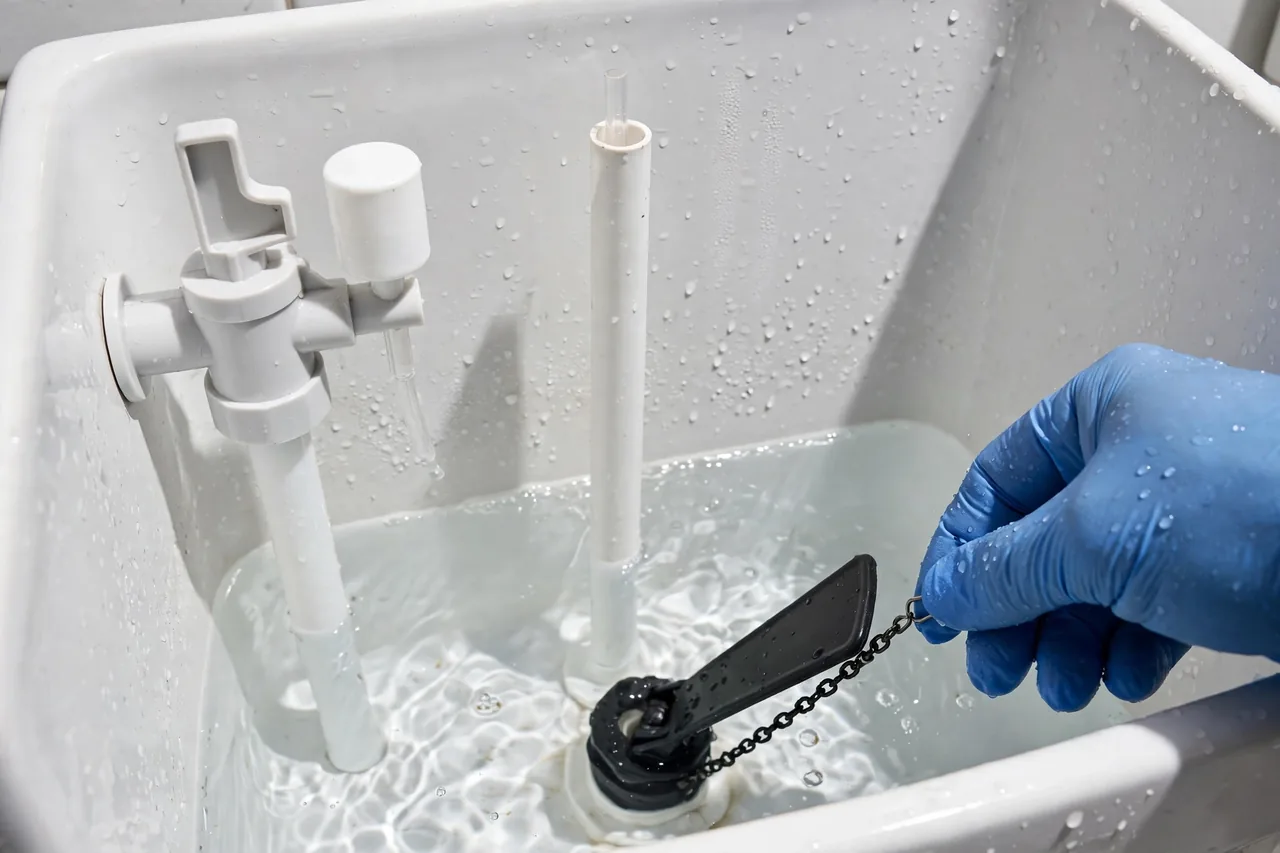
Work order
Leak Detection- Meter and Bill Check: We start at the meter: is it turning with everything off, and does the bill match a leak? A high water bill is the most common way a slab leak is found.
- Listening Survey: Acoustic equipment listens along the line for the sound of water escaping, which narrows a hidden leak to a section of pipe.
- Pressure Testing: Lines are isolated and pressure-tested in turn, so the leaking section is identified rather than assumed.
- Slab Leak Triage: Warm floor spots, the sound of running water, and low hot-water pressure are checked together, because a slab leak rarely shows only one sign.
- Written Findings: You leave with a written note of where the leak is, what it will take to reach it, and the repair can be quoted before work starts.
What the first leak detection visit covers
First visit
We check the meter, listen along the lines, pressure-test in turn, and put the leak location in writing.
Leak detection at Cleveland homes
Hidden leaks in houses, rentals, and manufactured homes — high bills, damp walls, and warm floors.
High water bill
A bill that jumps without a change in use is the most common first sign of a hidden leak.
Damp wall or ceiling
A stain that grows is traced to the pipe behind it, not painted over.
Running-water sound
Water heard with every tap off means a line is leaking somewhere.
Warm floor spot
A warm patch on a slab floor can mean a hot-water line leaking underneath.
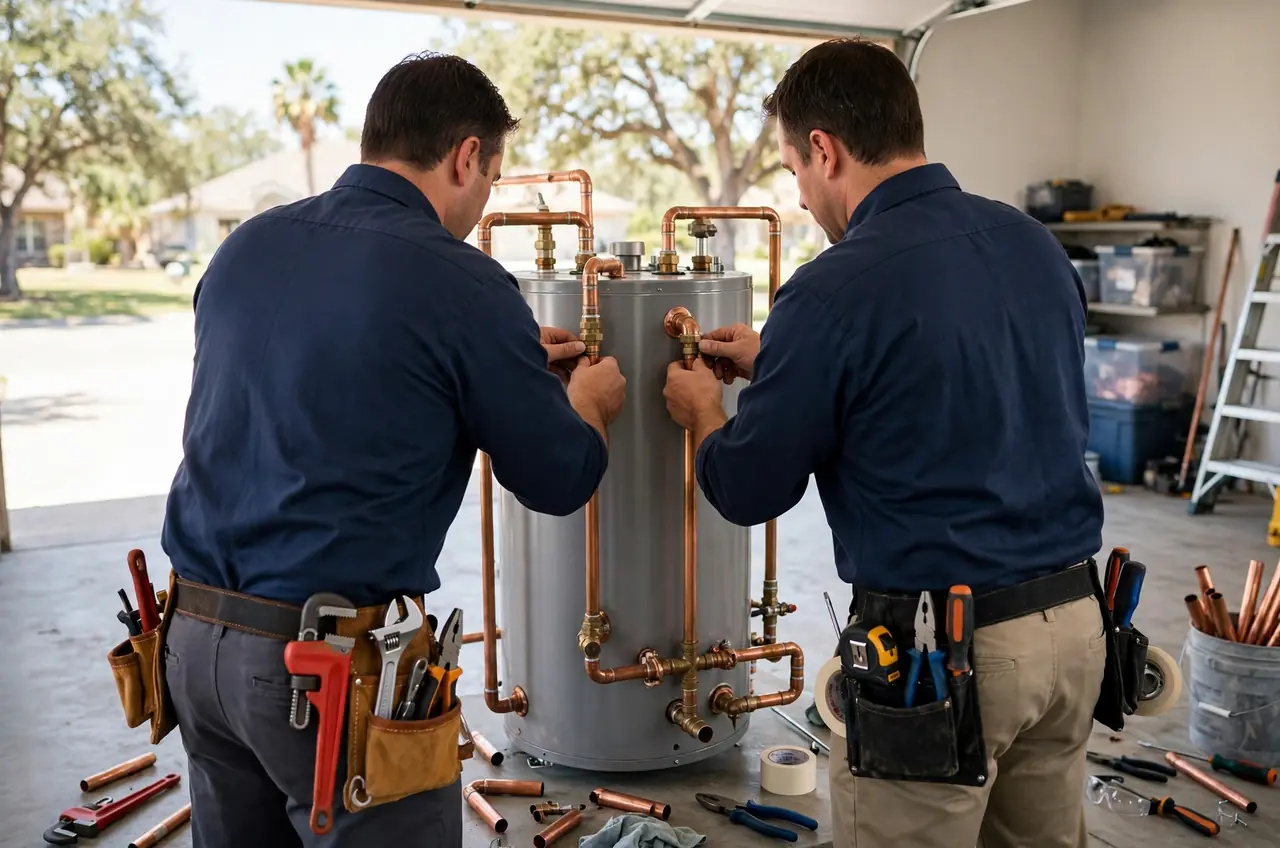
Leak detection at Cleveland businesses
A hidden leak in a business wastes water and damages stock and structure. Finding it early limits both.
Restaurant water loss
A rising water bill with no change in service is checked at the meter and along the lines.
Office damp and stains
Ceiling stains are traced to the line above before any ceiling is opened.
Multi-unit buildings
A leak in one unit is traced through shared lines, so the right unit is opened first.
What Leak Detection Cleveland TX Really Involves
Leak detection is diagnosis, not demolition. The leak is narrowed down with listening and pressure testing first, so the opening — in a wall, a floor, or a slab — is made in the right place.
Leak detection in Cleveland, TX, answers one question: where is the water going? The most common discovery route is a high water bill — a bill that jumps without any change in use. Check the meter with everything off: if it is still turning, water is leaving the system somewhere. From there, acoustic listening follows the sound of escaping water along the line, and pressure testing isolates sections in turn until the leaking one is found. That matters in Cleveland because most homes are slab-on-grade, and a leak under the slab cannot be seen — only heard, measured, and narrowed down.
Expansive gumbo clay under those slabs moves with wet and dry seasons, stressing copper lines until pinholes open and joints separate. That is the documented regional slab-leak mechanism, and it is why a warm floor spot, a running-water sound, low hot-water pressure, and a bill spike are checked together rather than one at a time. A single leak is a repair job — see Leak Repair. A leak under the slab is a specialist job — see Slab Leak Repair. If the same line leaks again, repiping is the conversation — see Repiping Services. Related reading: Why Is My Water Bill Suddenly So High?.
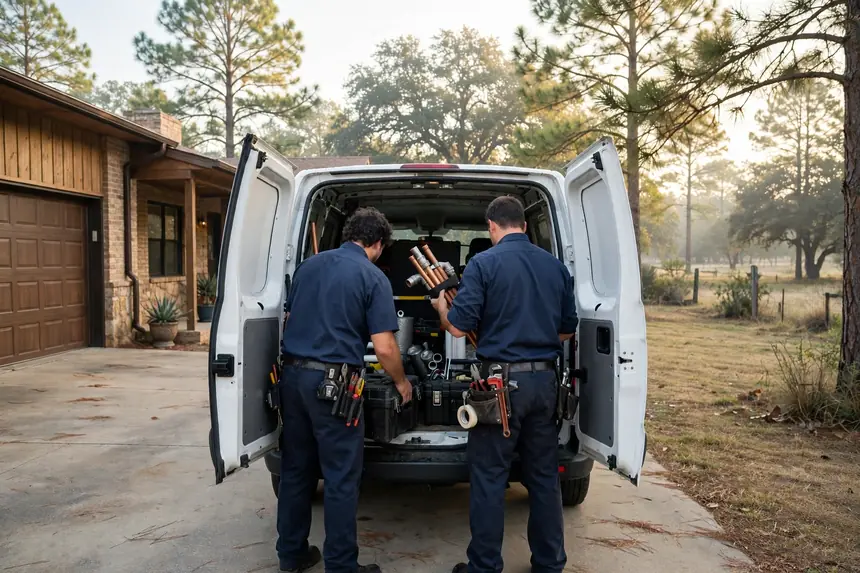
- What it is
- Finding hidden leaks with listening equipment and pressure testing, before anything is opened.
- When it helps
- A high water bill, damp walls, running-water sounds, or a warm spot on a slab floor.
- What you get
- The leak location in writing, and the repair can be quoted before work starts.
How a Leak Detection Call Runs
Five steps, from the meter check to the leak location in writing.
Tools We Use to Find a Leak
A leak is found by ruling sections out, one at a time, until only one is left.
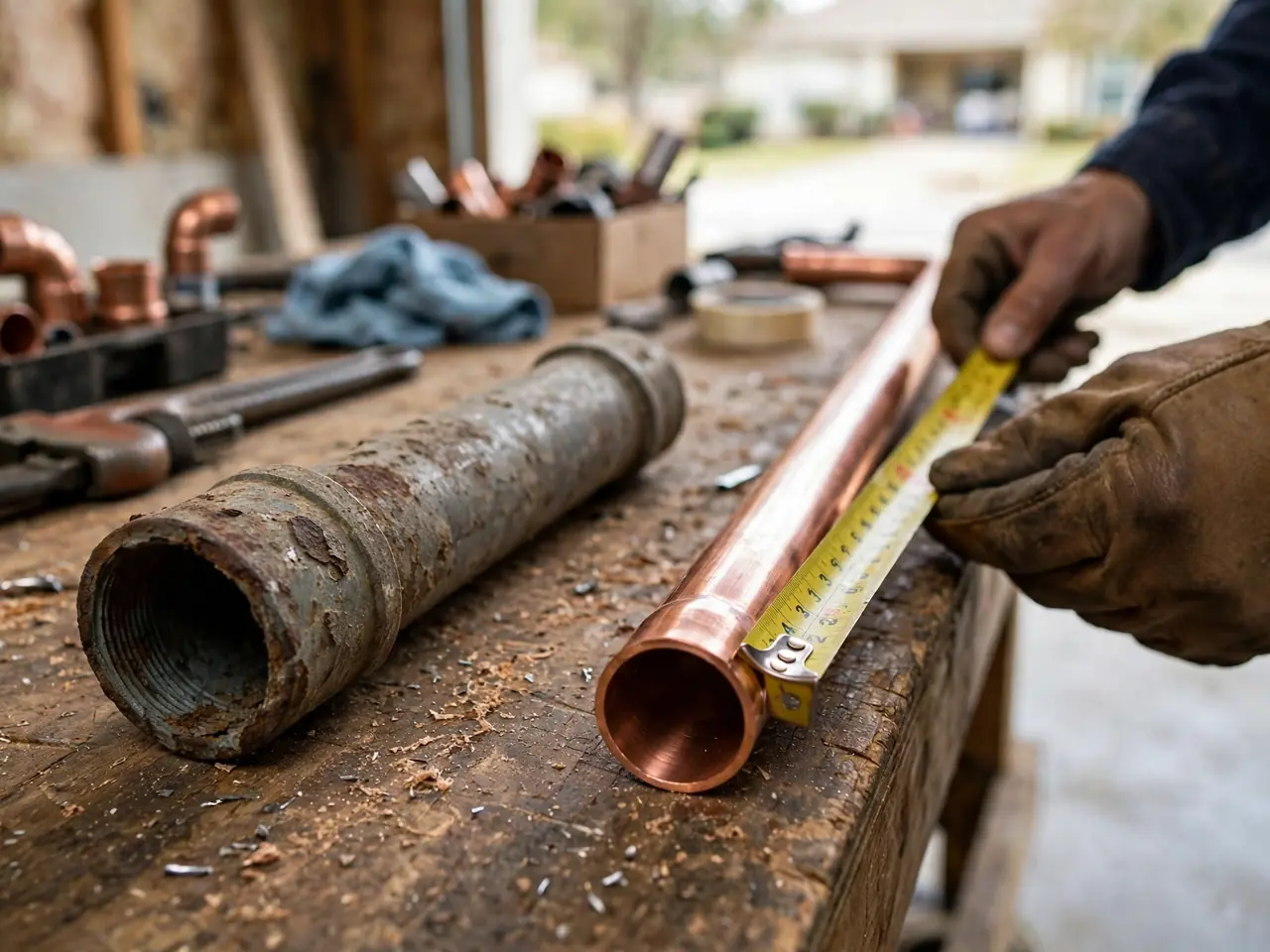
Lines are isolated and pressure-tested in turn, so the leaking section is identified rather than assumed.
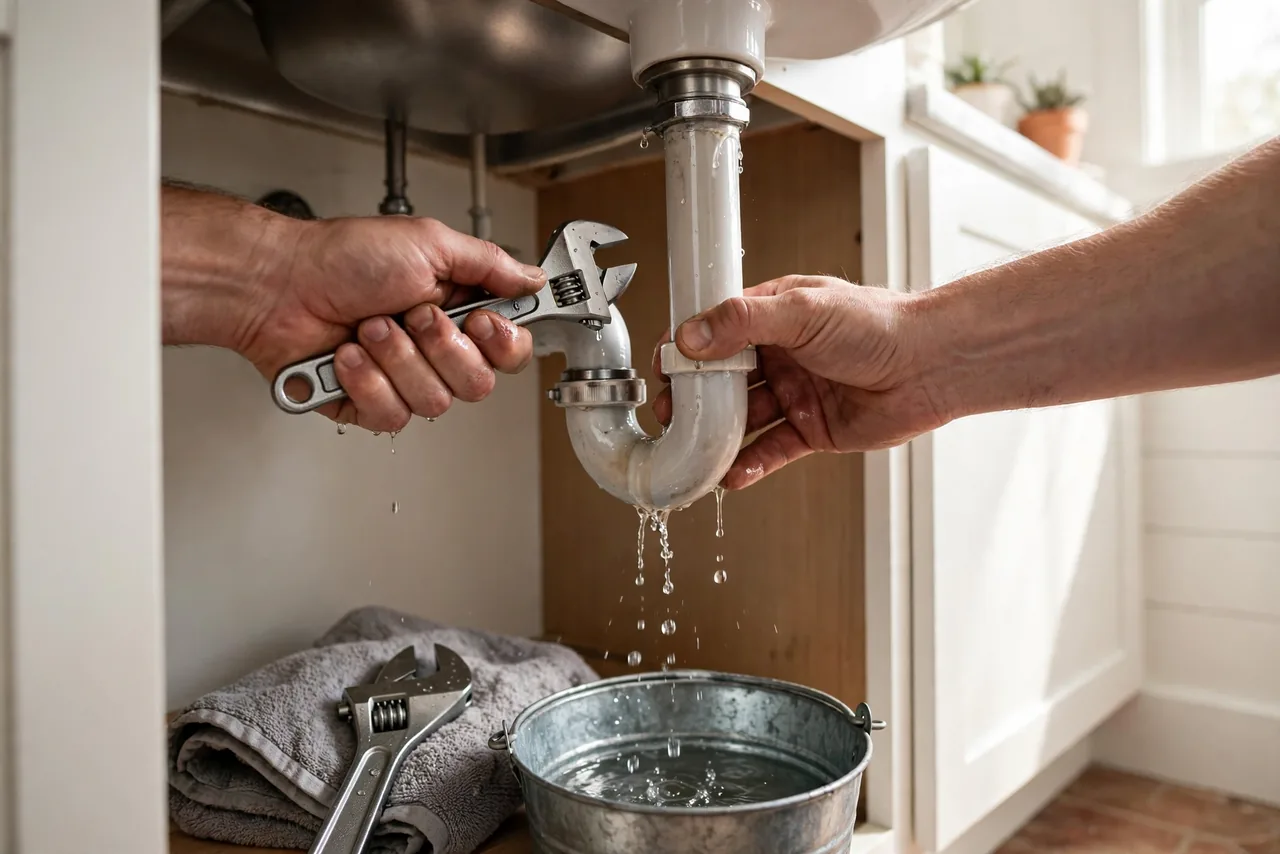
The water meter is the first instrument: turning with everything off means a leak, and the rate of turn says how big it is.

A meter reading shows how far water has travelled behind a wall or under a floor, so the opening is made in the right place.
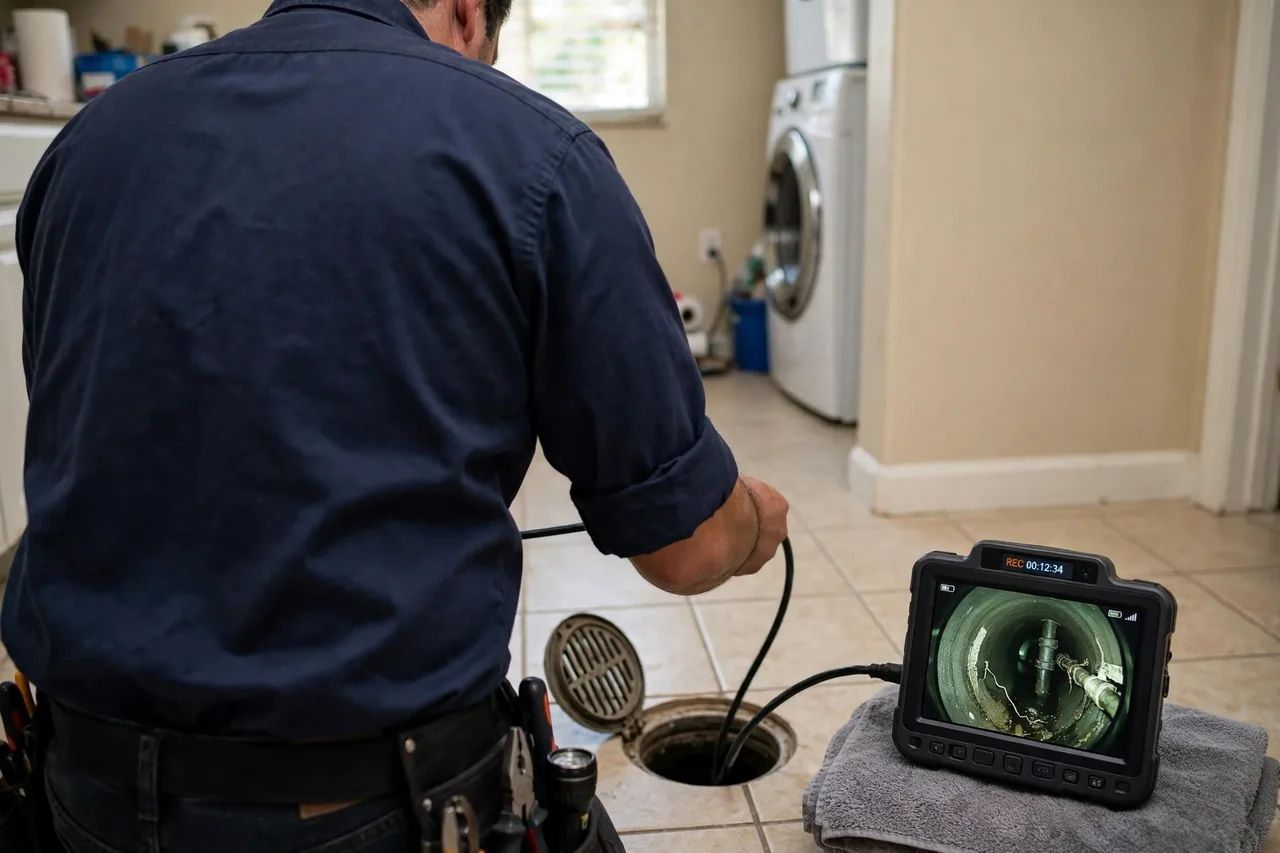
Where the leak is in a drain rather than a supply line, a camera shows the break, belly, or root intrusion behind it.
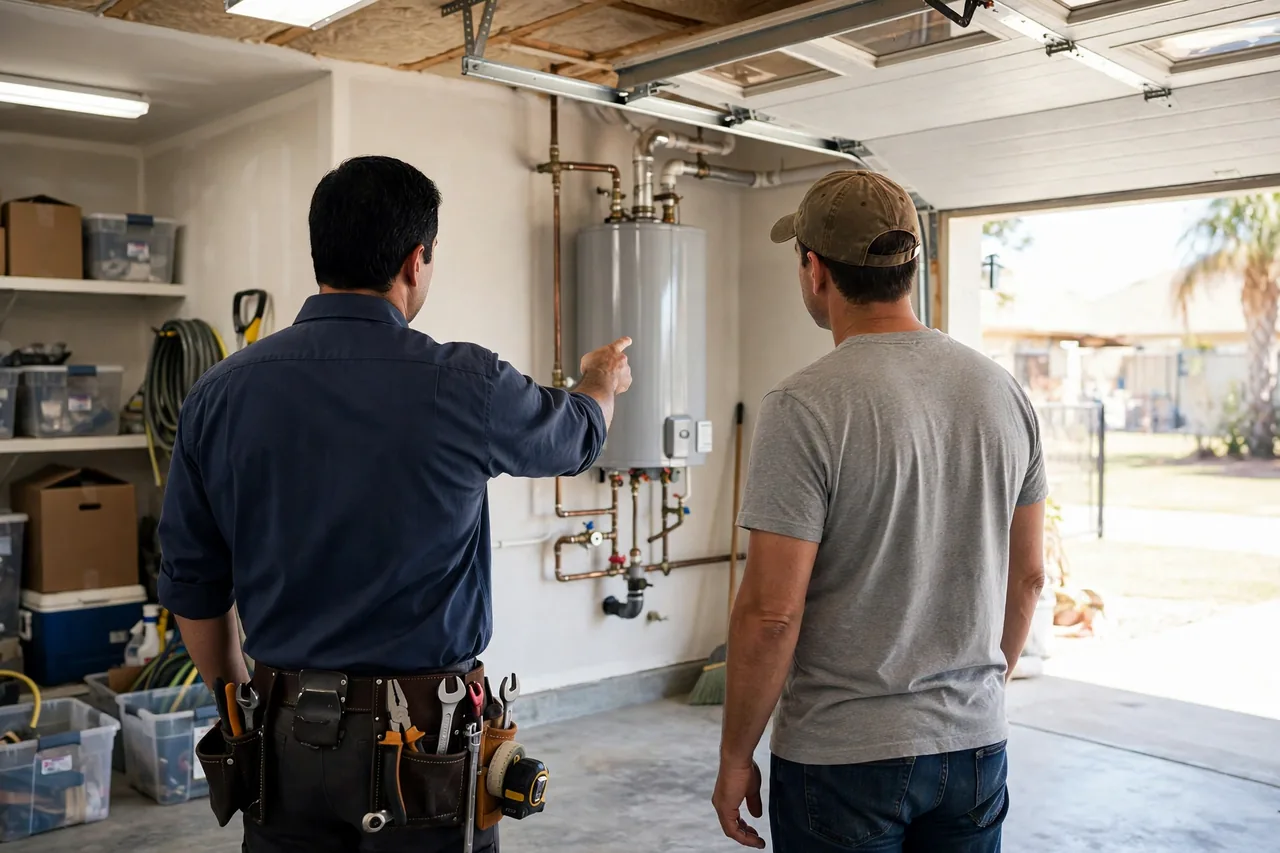
When to Call for Leak Detection
A homeowner in Santa Fe opens a water bill twice the usual amount, with no change in use.
That is the classic hidden-leak sign. We start at the meter and work inward from there.
HomesA restaurant notices a damp patch growing on a storeroom wall.
The leak is behind the wall, not in it. Listening and pressure testing find the line before the wall is opened.
BusinessesA property manager hears water running in a vacant unit with every tap off.
Water is leaving the system somewhere. The meter check comes first, then the listening survey.
Homes and businessesA homeowner feels a warm spot on the living-room floor.
A hot-water line may be leaking under the slab. That is a slab-leak triage, not a guess.
Homes
How Leak Detection Runs in Cleveland
Cleveland's slab-on-grade homes and expansive gumbo clay make hidden leaks a local pattern, not a rarity. The clay swells and shrinks with the seasons, stressing rigid copper lines in and beneath slabs until pinholes open. We work across Santa Fe and Tarkington Prairie, and the other Cleveland areas listed on this page.
Santa Fe
New-build homes where a high bill usually means a fitting or a line fault rather than age — but the meter check is the same.
Downtown Cleveland
Older homes with older copper and galvanized lines, where a leak may sit behind a wall that has been closed up for decades.
Tarkington Prairie
Rural homes on wells and rural water, where a leak may show up as a pump running too often rather than a bill spike.
- Santa Fe
- Downtown Cleveland
- Tarkington Prairie
- US-59 Corridor
From problem to finished result.
Slide to compare the photo with an illustrative inspection view. It is generated from the photo, not a measurement.
 Photo
High Bill Traced to a Slab Leak
Before: A water bill doubled with no change in use, and the meter was turning with everything off.
After: Listening narrowed the leak to a hot-water line under the living room. The location was put in writing and the repair quoted before any concrete was opened.
Damp Wall Traced to a Joint
Before: A stain on a bedroom wall kept growing, and the paint had been redone twice.
After: Pressure testing isolated the leaking section to a single joint behind the wall. One opening, one repair, and the stain stopped growing.
Running-Water Sound Found
Before: A homeowner heard water running at night with every tap off.
After: The meter confirmed a leak, listening followed it to a supply line in the attic, and the repair was made without opening the wrong ceiling.
Leak Problems We Find in Cleveland
The signs that bring us out, and what they usually mean.
High water bill
A bill that jumps without a change in use is the most common first sign of a hidden leak.
Damp wall or ceiling
A stain that grows is traced to the pipe behind it before anything is opened.
Running-water sound
Water heard with every tap off means a line is leaking somewhere in the system.
Warm spot on a slab floor
A hot-water line may be leaking underneath. That is a slab-leak triage.
Why Leak Detection Done Properly Matters
Opening a wall or a slab in the wrong place costs more than the leak. Finding it first is the whole job.
Finds Before Opening
Listening and pressure testing narrow the leak to a section of pipe, so the opening is made in the right place the first time.
Stops the Bill Rising
A hidden leak wastes water every hour it runs. Finding it stops the meter, not just the stain.
Separates Leak Types
A supply leak, a drain leak, and a slab leak are three different repairs. Detection tells you which one you have.
A Location in Writing
You leave with the leak location and the repair can be quoted before work starts, so the next step is a decision, not a guess.
What you leave with
Clear records you can keep and share.
Leak location
Where the leak is, in writing, with the evidence behind it.
Meter readings
What the meter showed with everything off, and what it means.
Repair quote
The repair can be quoted before work starts, including what needs opening.
Licensed by the Texas State Board of Plumbing Examiners
RMP M-42402
Our Responsible Master Plumber is Arnold Jay Strass Jr., Master Plumber licence M-42402, current through 06/30/2027.
Ask for a written scopeLeak Detection Done by Plumbers
Detection is plumbing diagnosis, done by licensed plumbers under our Responsible Master Plumber. The repair that follows meets the International Plumbing Code (IPC), 2015 edition, as adopted by the City of Cleveland.
Meter first
The meter is the first instrument: turning with everything off means a leak.
Listen, then test
Acoustic listening narrows the search; pressure testing confirms the section.
Pressure regulator
High system pressure can cause leaks and shorten fixture life. Where pressure is high, a pressure-reducing valve is part of the conversation.
Is your Cleveland area covered?
Type your ZIP code or town to check. If you are not listed, call and ask.
Cleveland ZIP codes
- 77327
- 77328
- US-59 Corridor
- SH-105 Corridor
- SH-321 Corridor
Towns we serve.
Based in Cleveland and covering the places around it. Pick one for local details.
What Cleveland Customers Say
4.7 stars from 13 Google reviews
I had received a ridiculous quote from another company to replace my water heater. I thought we could have it done much more reasonably. I found Jay and Precision Plumbing through Angie's List. The entire experience could not have gone more smoothly! His price was much more reasonable and I was happy to pay it. They had the unit swapped out super quick. Jay was always responsive. Basically everything you need and want when you need a plumber, quickly.
Robert Barton5 stars · Google review · a year ago
Victor and his crew did a great job installing my water softener and water filter in my house. I will definitely use Precision Plumbing for all my plumbing needs from now on. Highly recommend Victor and Precision Plumbing. Very professional and courteous.
Robert5 stars · Google review · a year ago
Another job well done! Needed my shower valve replaced. Will continue to use this company. (8/21/25)
hillary cranston5 stars · Google review · a year ago
Definitely recommend Precision Plumbing for any plumbing needs. The company that I work for, Whitestone Construction, has been using Precision Plumbing for about 2+ years now. They were actually recommended to me by a Regional Supervisor within our team and all of our PMs have nothing but positive experiences with this company. 10/10 quality work and fair pricing whether it's a commercial remodeling project or just a basic plumbing repair on a residential home.
Rafael Martinez5 stars · Google review · a year ago
I've been working with Victor and Javier on multi-family remodeling since 2022. Why? Because they care. Their guys are fast, efficient and clean. Victor and Javier will give you everything you paid for and probably throw in a little extra when you're not expecting it. They did some work at my home recently. They were in and out quicker than I expected and they were as unobtrusive as possible while they were here. Shoot! Even the city inspectors like 'em.
John Sczerby5 stars · Google review · a year ago
Leak Detection Questions We Hear
Short answers for the first few minutes. The team can cover the rest.
Still have a question?
Describe what you are seeing and we will point you to the right next step.
(346) 687-0011The most common cause is a hidden leak — often under the slab or behind a wall. Check the meter with everything off: if it is still turning, water is leaving the system. We find the leak with listening and pressure testing, then put the location in writing.
With acoustic listening equipment that hears water escaping, and pressure testing that isolates the leaking section. The leak is narrowed down before any concrete is opened, so the opening is made in the right place.
Yes. A supply leak under a slab or behind a wall may show only as a high bill, a running-water sound, or a warm floor spot. Damp is often the last sign, not the first.
How hidden the leak is, how many lines need isolating and testing, and whether the leak sits under a slab. Ask us to quote the repair in writing before work starts, once the location is known.
Other Work We Do
Other services from the same team.

Get Leak Detection Cleveland TX Scheduled
(346) 687-0011A high bill, a damp wall, or water you can hear but not see — call (346) 687-0011 and tell us the signs.
Contact Precision Plumbing LLC
Call (346) 687-0011 to schedule leak detection or ask a question. Monday to Saturday, 7:00 AM to 5:30 PM. Sunday Closed. Tell us the signs: the bill, the sound, the damp, or the warm floor.
Call to book a visit
Phone is the fastest way to reach us during business hours. Call and tell us what is happening and where.
Hours: Monday–Saturday 7:00 AM–5:30 PM, Sunday Closed. Phone is the only contact channel.
Licensed by the Texas State Board of Plumbing Examiners — RMP M-42402.
737 County Rd 3773, Cleveland, TX 77327