Tankless vs tank water heaters: which is better for Cleveland homes
A tank water heater stores hot water. A tankless unit heats it as it flows. Which one fits your Cleveland home depends on your gas line, your wiring, your venting, and how your family uses hot water.
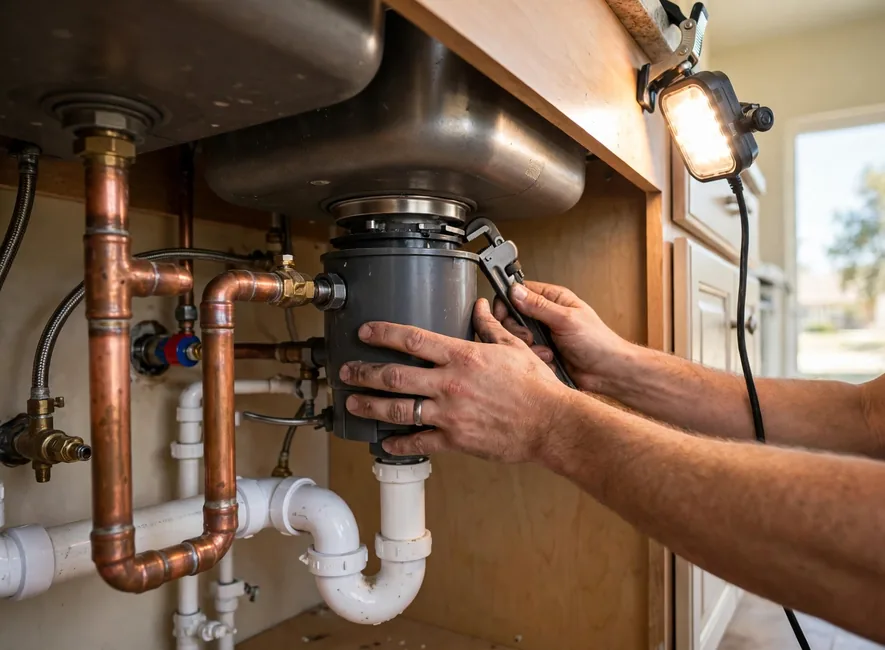
Every water heater replacement in Cleveland ends with the same question: put in another tank, or switch to tankless? Both are good equipment, and both fail when they are fitted to the wrong house. This guide compares them honestly for Cleveland homes, including the conversion work that a tankless swap really involves, the local water, and the permit question. No prices are listed, because the cost of either job depends on your house, and any number printed here would be a guess.
How a tank water heater works
A tank water heater keeps water hot continuously, so hot water is ready the moment a tap opens. It is simple, well understood, and easy to replace like-for-like, because the gas line, vent, and water connections are usually already there. Its limits are capacity and standby loss: a household that runs two showers and a dishwasher at once can empty the tank, and the tank heats water even when nobody is using it. A tank also has a finite life, and when the tank itself corrodes and leaks from the bottom, repair is not an option: the tank is replaced.
How a tankless water heater works
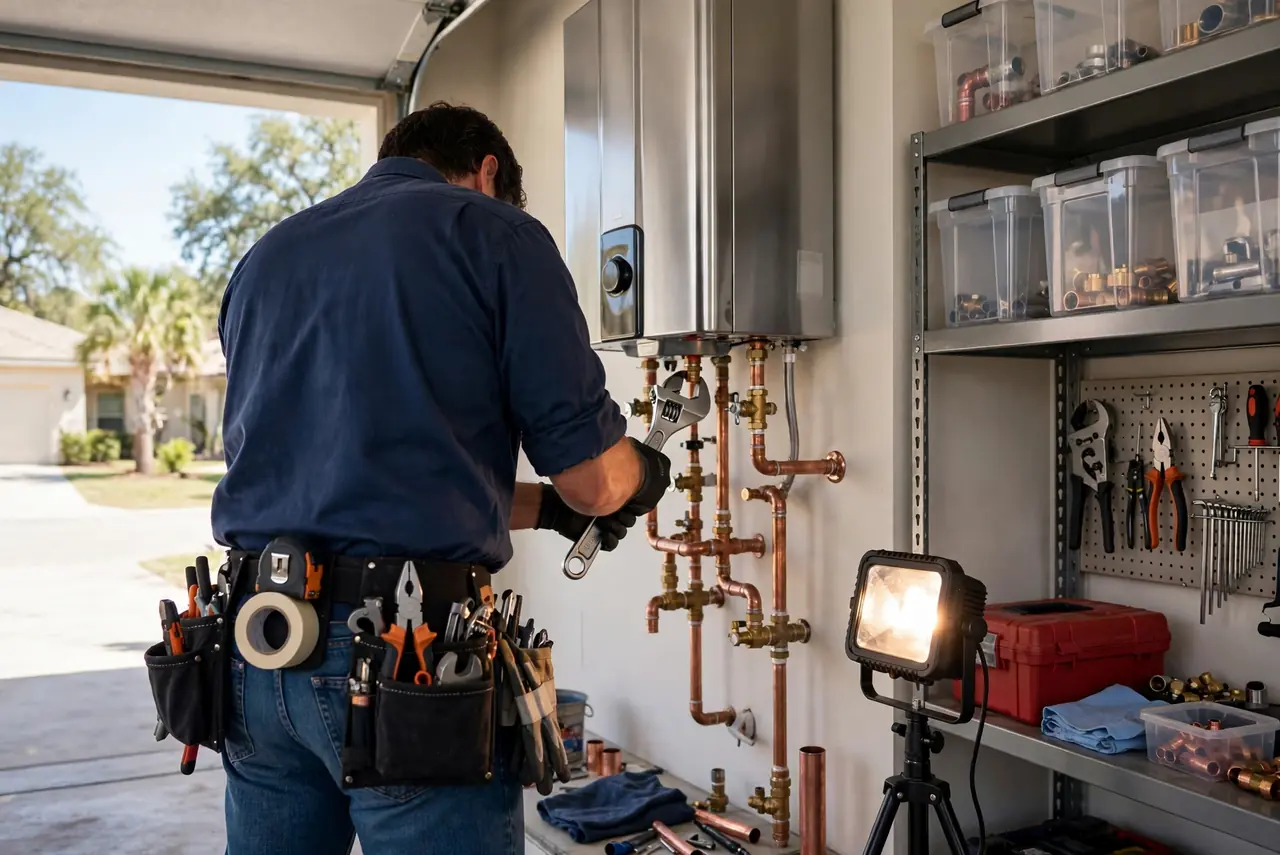
A tankless unit has no stored water. When a tap opens, a sensor fires the burner or the heating element and heats the water as it flows past, and it stops when the tap closes. There is no tank to empty and no standby loss, but there is a flow limit: the unit can only heat so much water at once, so a unit sized too small will run lukewarm when two showers and a dishwasher run together. Tankless units need regular descaling, because mineral scale builds up on the heat exchanger over time and reduces efficiency and flow. How often depends on your water and your usage, and the manufacturer's maintenance schedule is the guide.
Cleveland water and scale
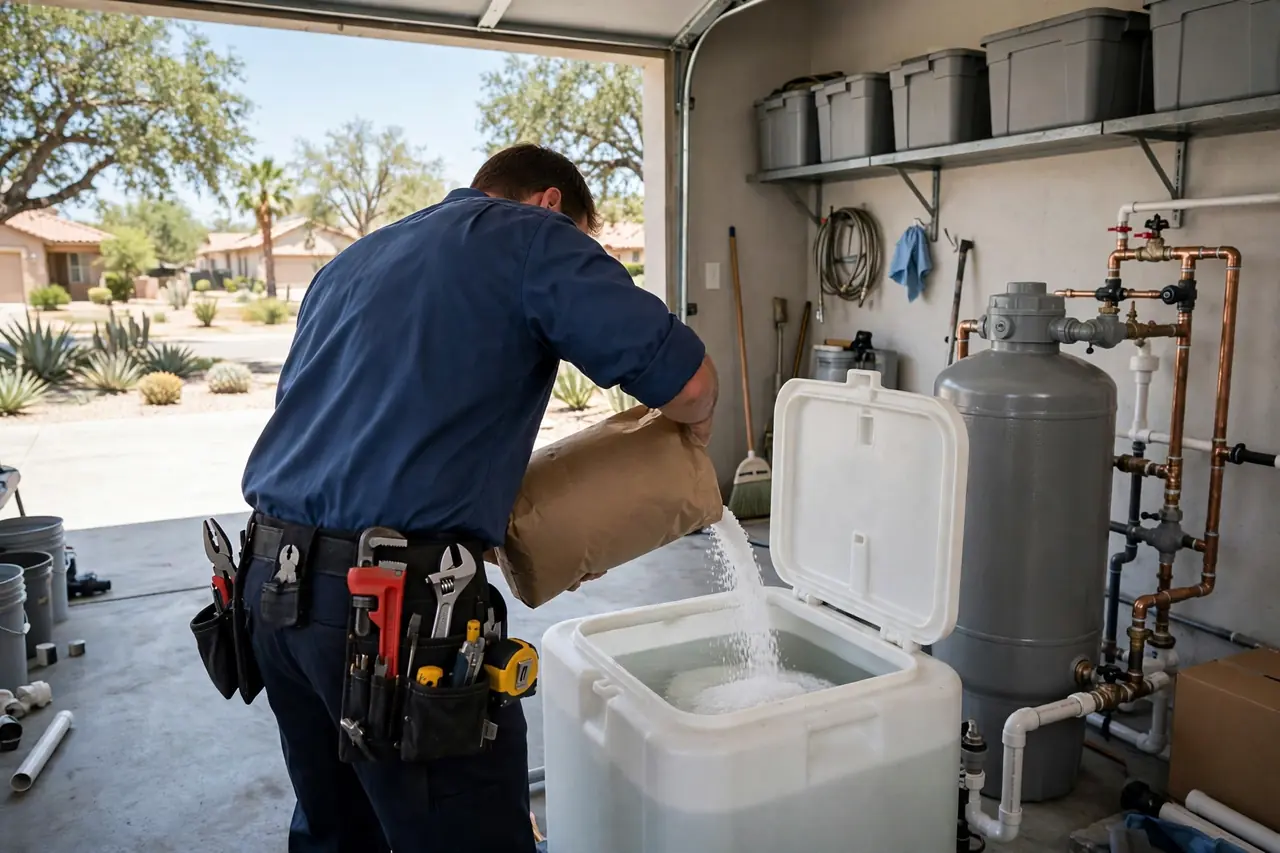
Cleveland's public water supply is groundwater from the Jasper and Evangeline Aquifers, disinfected before distribution. It is groundwater, not surface water, and that distinction matters when you read advice written for other cities. The City's Consumer Confidence Report does not publish a hardness figure for Cleveland's water, and secondary sources disagree with each other, so no hardness number is given here. What can be said honestly is that groundwater can leave mineral scale in any water heater, tank or tankless, and that scale is a maintenance question, not a reason to choose one type over the other. If scale is a concern in your home, test your water and follow the equipment maker's descaling schedule.
What a tankless conversion really involves
Switching from a tank to a tankless unit is not a drop-in swap, and any quote that treats it as one is worth questioning. A gas tankless unit usually needs a larger gas line than a tank unit, because it burns far more gas while it is running. An electric tankless unit usually needs a dedicated circuit, and often more electrical capacity than the existing panel provides. Venting is different too: a gas tankless unit needs stainless steel venting rated for its exhaust temperatures, and the vent route may need to change. The unit also needs a condensate drain in many installations, and freeze protection for the unit itself, which matters in a Cleveland winter. Our tankless water heater services page covers conversions and repairs, and our water heater installation page covers like-for-like tank replacement. Homeowners in Liberty Estates and other newer communities should check whether a conversion affects a builder warranty before work starts.
Permits, inspection, and sizing
A tankless conversion is still a water heater replacement for permit purposes, and it needs a permit and inspection like any other water heater job. Work in Cleveland is permitted and inspected under the International Plumbing Code, 2015 edition, as adopted by the City of Cleveland, and gas line sizing and venting must comply with the 2015 International Fuel Gas Code and the manufacturer's instructions. Ask who handles the permit application and the inspection. Sizing matters as much as the permit: a tankless unit should be sized for the fixtures your household runs at the same time, not for the number of bathrooms alone. A plumber who sizes by simultaneous use is sizing honestly. Our water heater repair team can also tell you whether your current tank is worth repairing or has reached replacement age.
Which one is better for your home
Choose a tank if you want the simplest replacement, if your household uses hot water in short bursts rather than all at once, or if the gas line, venting, and electrical work for a conversion would cost more than the tankless unit saves. Choose tankless if your household regularly runs out of hot water, if you have the gas or electrical capacity for it, and if you are willing to keep up with descaling. Neither choice is wrong in the abstract: the right one is the one that fits your house, your usage, and your willingness to maintain it. Get a written quote for both options before deciding, and ask what the quote includes beyond the unit itself.
Frequently Asked Questions
Is a tankless water heater better than a tank in Cleveland TX?
It depends on your home. Tankless gives endless hot water within its flow limit and no standby loss, but needs a larger gas line or a dedicated circuit, stainless venting, and regular descaling. A tank is simpler to replace like-for-like.
What does a tankless conversion involve?
Usually a larger gas line for a gas unit, or a dedicated circuit for an electric unit, plus stainless steel venting, a condensate drain, and freeze protection. It is not a drop-in swap for a tank unit.
Does Cleveland's water cause scale in water heaters?
Cleveland's water is groundwater from the Jasper and Evangeline Aquifers. Groundwater can leave mineral scale in any water heater. The City's report does not publish a hardness figure, so test your water if scale is a concern.
Does a tankless water heater need a permit in Cleveland?
A tankless conversion is still a water heater replacement for permit purposes and needs a permit and inspection. Work is permitted under the International Plumbing Code, 2015 edition, as adopted by the City of Cleveland.
How do I size a tankless water heater?
Size it for the fixtures your household runs at the same time, not just the number of bathrooms. A unit sized too small runs lukewarm when two showers and a dishwasher run together.
Get help with plumbing in Cleveland
If your water heater in Cleveland is failing, or you are weighing a tankless conversion, call Precision Plumbing LLC at (346) 687-0011 during business hours, Monday through Saturday, 7:00 AM to 5:30 PM. We inspect first, quote in writing on request, and test the unit before we leave.